
To answer “is this car a good deal,” compare the car’s advertised asking price with a supported range for comparable vehicles in its local market right now. A price below that range can be a promising signal, but it cannot tell you whether the car is in good condition or right for you. Check the vehicle, the evidence behind the price, and its history before deciding.
The four-part test: is this car a good deal?
Use these four checks to evaluate the specific listing you found, not just the make and model in general.
-
Check the vehicle’s identity. Confirm the year, make, model, trim, drivetrain, body style, and equipment as far as the available records allow. The VIN, window sticker, and listing details can help you check whether the car is what the seller says it is. A mismatch can make a price comparison less useful.
-
Compare the asking price with the range. Find the comparable range’s floor and ceiling, then see where the advertised asking price sits. This answers the price question: is the vehicle listed below, within, or above the range?
-
Check comparable depth and the snapshot date. A range supported by more comparable listings gives you more evidence to inspect. Make sure the record is dated, since listings, and verdicts, can change as the market updates.
-
Check the seller’s claims separately. Ask for documentation of any important claims about equipment, history, or condition. These details can matter to your buying decision, but they don’t change OAV’s Price-to-Market verdict.
A used car price check is most useful when you can see both the result and what supports it: the comparable depth and the snapshot date.
What the four price verdicts mean
| Where the price sits | Verdict | What it means for you |
|---|---|---|
| Below the range floor by at least OAV’s minimum-gap margin, with enough comparables | Great Deal | The advertised price is notably below the supported comparable range. Continue with the history, condition, and total-price checks before deciding. |
| Within the range, or below the floor by less than the required margin | Fair Price | The asking price is broadly within the current comparable range. Consider the rest of the vehicle and the complete cost. |
| Above the range ceiling | Overpriced | Comparable vehicles are advertised for less right now. You can ask about the difference, negotiate from evidence, or keep looking. |
| Not enough reliable evidence to support a rating | Unscored | There isn’t a dependable basis for a verdict. Treat that uncertainty as information, not as a sign that the price is fair. |
Overpriced does not mean it’s a bad car. It means comparable vehicles are advertised at lower prices in the current market. And an Unscored result is more useful than a confident guess when the evidence is too thin or unreliable.
A dated snapshot example
In a November 6, 2026 snapshot, a 2023 Ford Bronco 4-Door Outer Banks was advertised for $32,490 in Cherry Hill, New Jersey. It had 46,636 miles. The comparable range was $37,639–$39,250, supported by 58 comparables. The Price-to-Market verdict was Great Deal, under methodology ptm-verdict-v10.
That asking price was $5,149 below the range floor. This is a dated example, not a statement about today’s price or availability; verdicts can change when listings and market evidence change. You can inspect the vehicle’s evidence record.
For another vehicle, a price within the supported range would be Fair Price; a price above its ceiling would be Overpriced. The verdict depends on where that specific asking price sits, not on whether the car seems desirable or has features you like.
What to do with the result
- Great Deal: Treat it as a reason to investigate, not a reason to skip the inspection. Check the history, title, claims, and itemized out-the-door price. If those checks meet your needs, you can decide whether to proceed.
- Fair Price: The asking price is within the range, so there may be less price-based leverage. Compare the car with your needs and budget, and ask questions about anything the evidence or listing leaves unclear.
- Overpriced: Ask the dealer to explain the difference, then use the comparable range to guide a price conversation. Our guide to how to negotiate a used car price covers how to approach that discussion. If the price or terms don’t work for you, keep looking.
- Unscored: Don’t treat missing evidence as approval or disapproval. Look for more information, review other comparable listings, or wait for stronger evidence. You can also decide to walk away if you’re not comfortable with the uncertainty.
What price evidence can’t tell you
A good price on a bad car can still be a bad deal. A Price-to-Market verdict does not establish condition, title or accident history, dealer conduct, or suitability for a particular buyer.
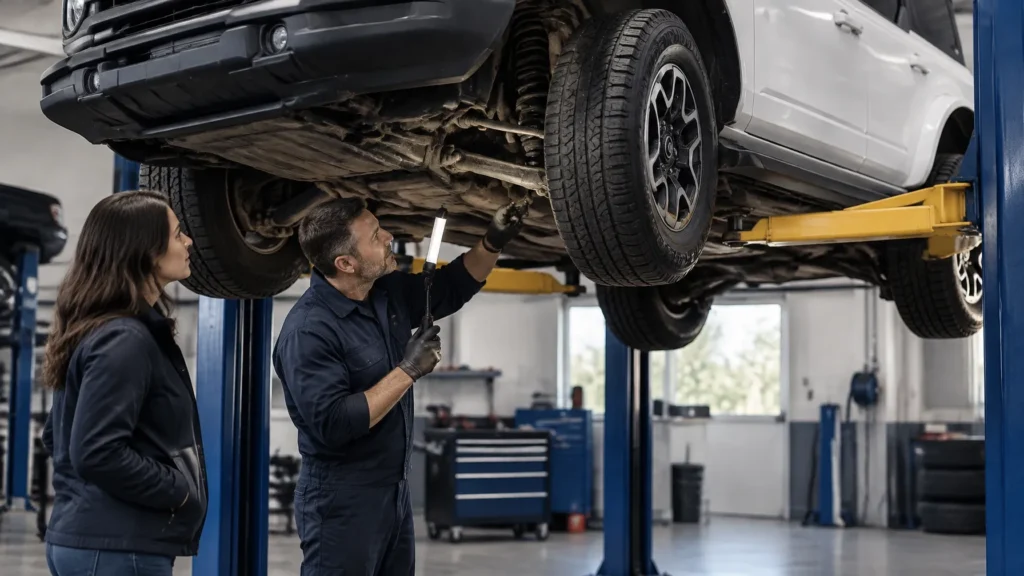
Before you commit, review available vehicle-history and title information, verify the VIN, and arrange an independent pre-purchase inspection. Check the vehicle in person, take a test drive, and ask for the complete out-the-door price in writing. Our used-car pre-purchase checklist walks through those steps.
How OAV™ does this
OAV™ is the automotive answer engine. It compares a dealer-advertised asking price against a comparable range built from daily-refreshed dealer-advertised listings. The range starts with the local market and uses regional evidence only when local evidence is too thin. Every comparable price is a real advertised price, never mileage-adjusted.
Mileage is never used to select comparables or adjust their prices; OAV withholds a verdict when mileage looks unreliable, or when higher-than-typical mileage, not a market discount, better explains a lower price. The Price-to-Market verdict compares only the asking price with the comparable range. Days on lot and other demand signals are shown separately; they are never inputs to the verdict.
Each verdict carries a snapshot date and shows how many comparable listings it is based on; the current methodology version is ptm-verdict-v10. As of November 2026, OAV tracks more than 7 million unique new and used vehicles across all 50 states and more than 60,000 U.S. dealerships, with listings refreshed daily. Read how OAV prices vehicles for more on the evidence and methodology.
Dealers cannot pay for a better verdict, and no dealer input or third-party score enters it.
To answer how much you should pay for a used car, start with the evidence for the specific listing, then weigh the vehicle’s condition, history, and total cost against your own needs. You can search the market at app.oav.io or inspect a vehicle’s evidence record before deciding whether to visit the dealership.
More from OAV: start with the used car price check guide, look up a car’s asking price with the VIN price check, see how OAV.io compares with CarGurus, Cars.com and TrueCar, or read why book value and market value differ.
Frequently asked questions
How do I know if a used car is a good deal?
Compare its advertised asking price with a dated range for comparable vehicles, and check how many listings support that range. Then verify the vehicle’s identity and review its claims, history, title, and condition. A price verdict answers the price question, not the whole buying question.
What makes a car price fair?
A Fair Price means the asking price is within the supported comparable range, or below its floor by less than the margin required for a Great Deal verdict. It describes the car’s position against comparable advertised prices, not its condition or suitability for you.
Is a car below book value always a good deal?
No. A book value does not establish that a specific car is fairly priced against current comparable dealer-advertised listings, and a low price does not prove the vehicle is sound. Check the comparable evidence, then inspect the car and review its records.
What if there aren't enough comparable cars to judge the price?
An Unscored verdict means there isn’t enough reliable evidence to support a price rating. It is better to recognize that limit than to mistake a guess for an answer. Gather more information or consider other vehicles with stronger evidence.