
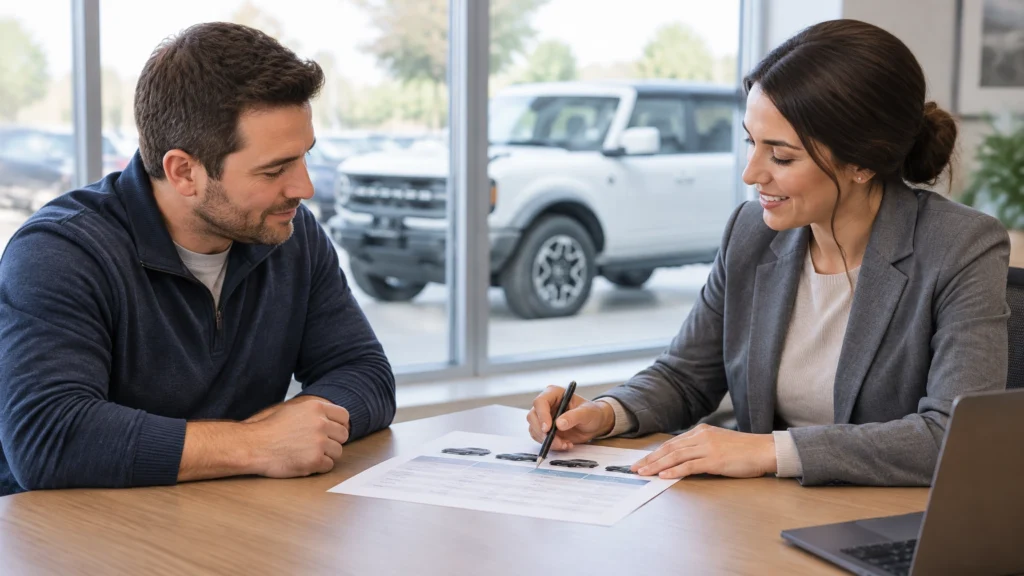
To learn how to negotiate a used car price, start with the local comparable range, not a guess or a single book value. Find where the advertised price sits against that range, then use the evidence to guide your conversation and decide what you’re willing to pay.
How to negotiate a used car price from a comparable range
A lot of negotiation advice says to “make a low offer.” But without knowing what similar cars are advertised for nearby, it’s hard to tell whether your offer is reasonable, or whether the asking price is already unusually low.
Use this process before you contact the dealer:
- Match the vehicle as closely as the available data allows. Start with year, make, model and trim. Check the drivetrain and body style where relevant, and compare listings in the same local market.
- Look at a range, not one listing. A single unusually cheap or expensive vehicle may not represent the market. Note the number of comparable vehicles and the range’s floor and ceiling.
- Place the asking price within that range. Is it below the floor, within the range, or above the ceiling? That position helps you decide whether you already have leverage or have a case for negotiating.
- Set your numbers before you visit. Decide on a target, a maximum you can accept, and a point where you’ll walk away. Ask for an itemized out-the-door price so taxes, fees and add-ons don’t blur the vehicle price.
- Open with what you found. Explain the evidence first. Then ask whether the dealer can work with you on the price.
A market range won’t tell you exactly what a dealer will accept. It gives you a grounded way to discuss the advertised price and make your own decision about what is a fair price for a used car.
A snapshot example: leverage versus a case to negotiate
OAV’s November 6, 2026 snapshot recorded a 2023 Ford Bronco 4-Door Outer Banks advertised for $32,490 in Cherry Hill, New Jersey, with 46,636 miles. Against 58 comparables, its local comparable range was $37,639–$39,250. OAV classified it as a Great Deal under methodology ptm-verdict-v10.
At $32,490, the Bronco was $5,149 below the range floor. That’s an example of “you already have leverage”: the advertised price was substantially below the comparable range. You might still ask for the out-the-door total, review the vehicle’s history, and get an inspection, but the evidence doesn’t suggest the asking price needs to be pushed down simply because negotiation is expected.
Now consider a different car advertised above its comparable range ceiling. That’s “you have a case”: similar advertised vehicles are currently listed below this car’s asking price. You can show the range and ask whether the dealer can bring the price closer to it. Overpriced doesn’t mean it’s a bad car. It means comparable vehicles are advertised for less right now, which can be a useful point in the conversation.
This Bronco is a dated example, not a promise about today’s price or availability. Verdicts can change as listings and market evidence change.
What to say, when to say it
| When | What to say |
|---|---|
| Opening | “I’m interested in this vehicle. Before I come in, could you send me the complete out-the-door price, itemized?” |
| Share your evidence | “I’m comparing it with similar vehicles in this market. The range I found is [range], and this listing is [below/within/above] it. Can you tell me how you arrived at the asking price?” |
| If they say, “It’s already priced to market” | “That may be. Could we look at the comparable range together? I’d also like to confirm the vehicle price and all fees on the buyer’s order.” |
| If they say, “Let’s talk monthly payment” | “I’d like to settle the vehicle’s out-the-door price first. Then I can compare financing separately.” |
| If they say, “Someone else is looking at it” | “I understand. I’m not able to make a decision without reviewing the total price and the vehicle. If it sells, I’ll keep looking.” |
| If the numbers don’t work | “Thanks for walking me through it. This is above the amount I’m comfortable with, so I’m going to pass for now.” |
What not to use as your anchor
For used car price negotiation, avoid treating any one of these as the answer:
- Book value: Useful context, but it may not show what comparable dealer-advertised vehicles are listed for in your local market.
- Wholesale or auction prices: These reflect a different part of the market than the retail asking price you’re negotiating.
- Private-party listings: They can be useful context, but they aren’t the same comparison as dealer-advertised vehicles.
- Monthly payment: A payment can change with the loan term, interest rate, down payment and add-ons. Agree on the vehicle’s out-the-door price first.
- “Invoice”: An invoice figure by itself doesn’t establish what similar cars are advertised for nearby.
- One competing listing: It may differ in configuration, location or other details. Look at a supported range rather than anchoring to one outlier.
How OAV™ does this
OAV compares a dealer-advertised asking price with a comparable range built from daily-refreshed dealer-advertised listings. It starts with local-market evidence and uses regional evidence only when local data is too thin. Prices are the actual advertised prices, not mileage-adjusted prices.
Each verdict carries a snapshot date and shows how many comparable listings it is based on. OAV’s price verdict compares only the asking price against the comparable range. Days on lot and other demand signals are shown separately; they are never inputs to the verdict. Mileage is never used to select comparables or adjust their prices. When evidence is insufficient, OAV marks a vehicle Unscored rather than guessing.
Dealers cannot pay for a better verdict. You can search the market at app.oav.io and read how OAV prices vehicles.
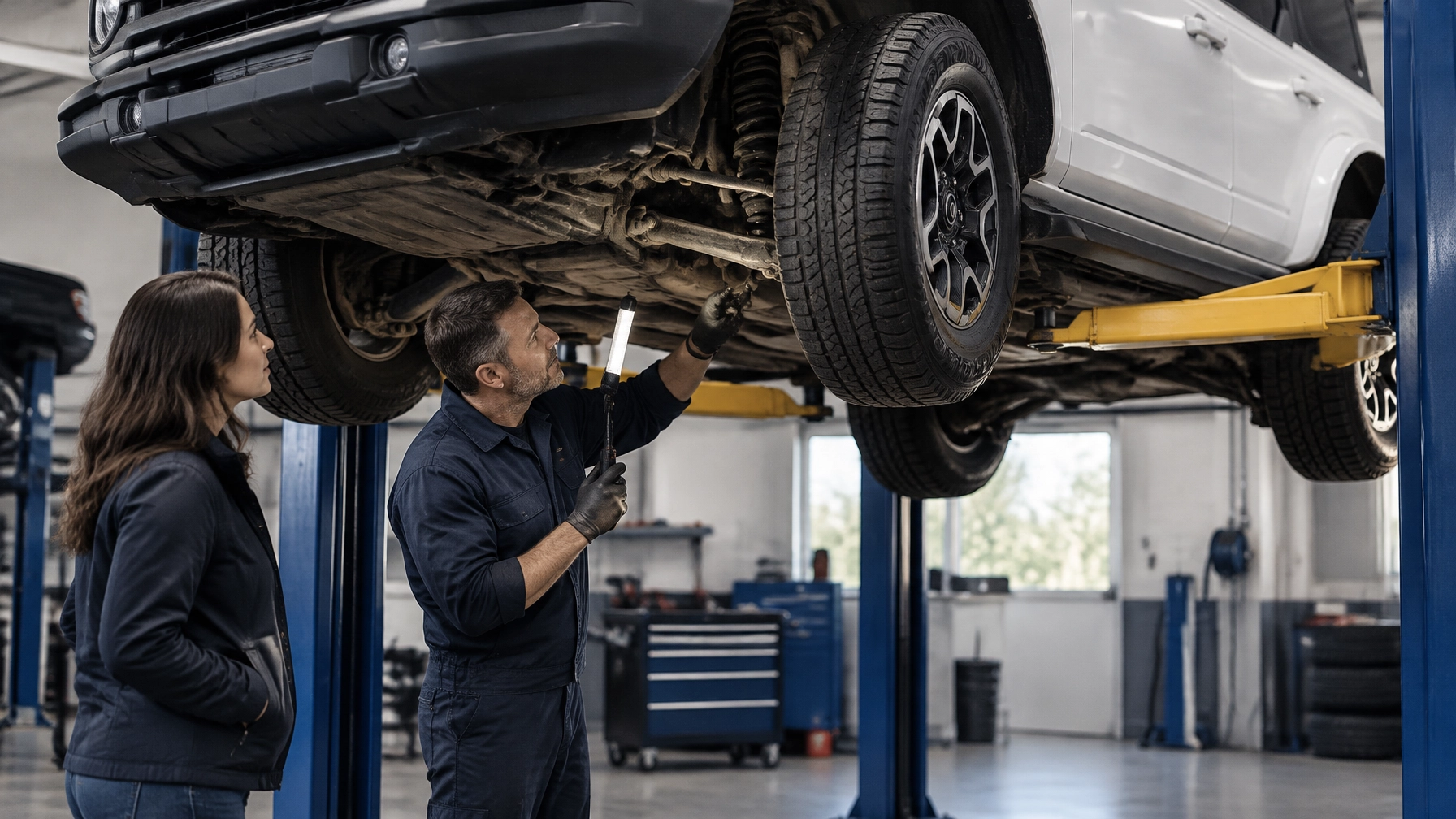
A verdict does not establish a vehicle’s condition, title or accident history, dealer conduct, or whether the car suits you. Check its title and history, and arrange an independent inspection before you buy.
More from OAV: start with the used car price check guide, look up a car’s asking price with the VIN price check, see how OAV.io compares with CarGurus, Cars.com and TrueCar, or read why book value and market value differ.
Frequently asked questions
How much can you negotiate on a used car?
There’s no reliable fixed percentage. It depends on the vehicle, its advertised price relative to comparable listings, its condition and the dealer’s willingness to negotiate. Use the comparable range to decide what seems reasonable, and confirm the out-the-door total.
What is a fair price for a used car?
A useful starting point is the range of similar dealer-advertised vehicles in the local market. Check where the specific asking price falls within that range, then consider condition, title and history separately. A market comparison is evidence about price, not a substitute for inspecting the car.
Should I negotiate on a car that’s already a Great Deal?
You can ask questions and review the out-the-door price, but a Great Deal means the asking price is already below OAV’s comparable-range floor by at least OAV’s minimum-gap margin, with a comparable pool deep enough for a confident verdict. Focus on verifying the vehicle and the total cost rather than assuming there must be more room to negotiate.
Is it rude to walk away from a car deal?
No. You can politely say the price or terms don’t work for you and leave. Walking away is a practical way to stick to your budget when the numbers or the vehicle don’t meet your needs.
When you’re ready, search the market at app.oav.io to see how a vehicle’s asking price compares with the available evidence.